
Functional distinctions
A data logger acquires and stores observations. A router forwards network traffic between networks. An IoT gateway connects instruments or a device network to an application, often translating or organizing their data. These functions can coexist in one device, so product names alone are an unreliable guide to system design.
Start with the required behavior: which measurements must be acquired, where records must survive a communications outage, and which networks must be connected? This separates three questions that are often combined in a purchase specification. A router does not automatically understand an environmental sensor command, and a gateway does not automatically offer long-term local storage.
Data acquisition and storage
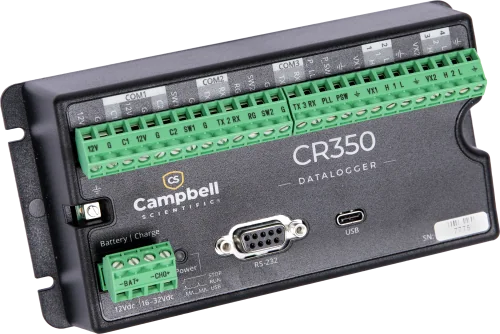
A logger commonly schedules measurements, applies a program and saves observations in data tables. Campbell Scientific’s CR350 is an example of a measurement and control logger with configurable communications. Its documentation describes internal storage and table behavior, including overwriting older records or stopping when a table is full, according to configuration.
This behavior matters at remote sites. Calculate the number of records from the sample interval and retention period, then account for storage overhead and available memory. Test loss of external power and interrupted communications. A stored number without a stable timestamp, instrument identity and units is difficult to interpret later.
Routing and instrument integration
Routing concerns the movement of network packets. Instrument integration concerns electrical compatibility, command exchanges and interpretation of the returned values. A cellular router can provide internet access for a separate logger; an integrated cellular gateway can combine these functions. Neither arrangement is universally preferable.
Pulse offers two sliding module positions, an integrated battery and solar panel, a waterproof enclosure and a local OLED interface with buttons. This combination is relevant when installation space and external power equipment are limited. Its suitability still depends on the required instrument module, modem configuration and local software behavior. Confirm buffering and control requirements independently of its communications list.

Integrated soil monitoring
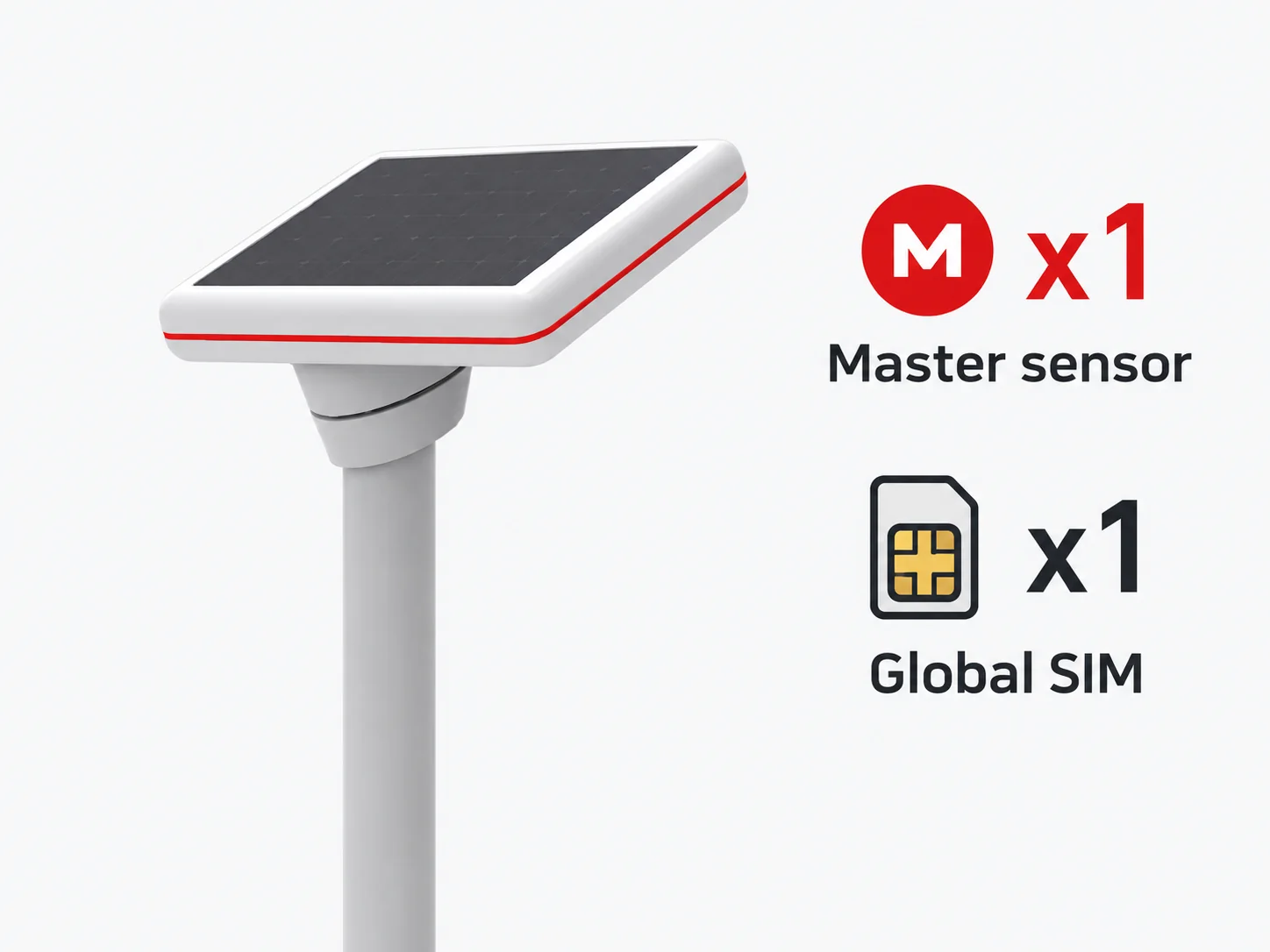
Pycno Terra illustrates a further arrangement: sensing and network collection within a soil monitoring family. The Terra Master has cellular connectivity and can collect observations from Terra Nodes. A Node requires the compatible Master infrastructure; it should not be described as an independent cellular device.
The Terra family offers different sensing lengths for observations at multiple depths. Select the probe length against the root zone and installation method rather than simply choosing the longest option. Terra is a relevant option when soil observations are the central requirement. Pulse is more appropriate to investigate when the project must also connect varied external instruments or automation interfaces.
Wired soil sensors and shared equipment
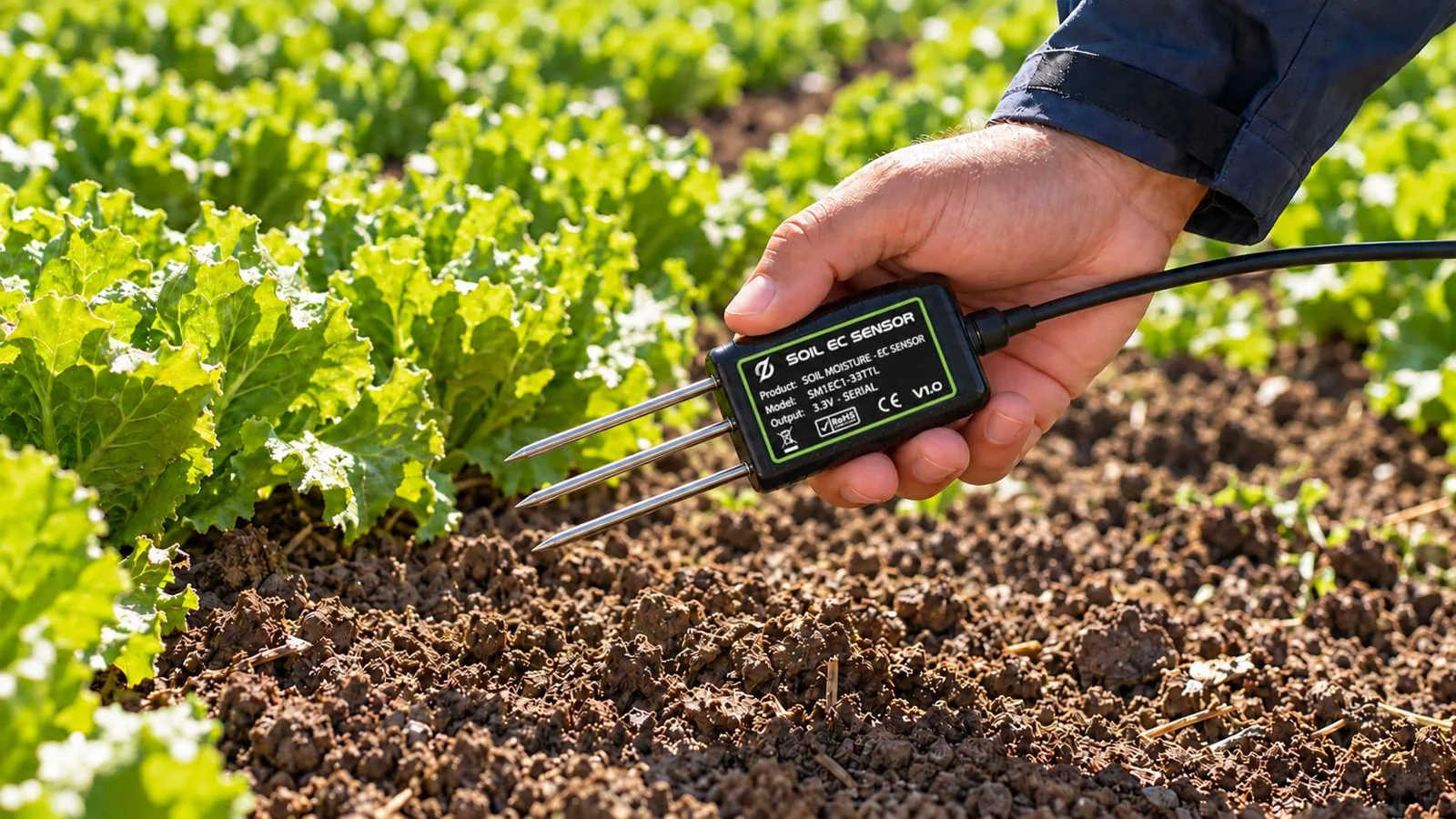
Soil Mini is a localized wired moisture and electrical conductivity sensor. Its interface variant must match the acquisition equipment. A Pulse installation with the appropriate sliding module can combine this type of sensor with other supported instrument inputs, while a suitable logger may provide a different measurement and storage arrangement.
Write the system specification as a chain: sensor, input interface, acquisition schedule, local storage, internet connection and application. Assign each step to actual equipment. This exposes missing power supplies, unsupported serial protocols and assumptions about which device keeps the authoritative record.
Selection and maintenance
Use a dedicated logger where the measurement program and retained local record are central requirements. Use a suitable router where network connectivity is needed by equipment that already performs acquisition. Investigate a modular gateway where external sensor integration and remote delivery need to be combined. These are selection principles, not strict device categories.
Document who maintains the measurement program, firmware, SIM plan and remote application. Test an outage and recovery sequence before deployment. A compact integrated system reduces the number of separate components, while separate devices can make independent replacement easier. The appropriate choice depends on the site’s measurement obligations and maintenance capacity.